Apartment Emergency Power: Safe, Practical Options and a Ready Plan
When the grid goes down in an apartment, decisions must balance safety, building rules, and actual needs. This guide walks through permitted portable power choices, sizing, setup, maintenance, and a rehearsable emergency plan you can implement today.
- TL;DR: Use battery-based portable power stations or a UPS; avoid internal combustion generators.
- Size by watt-hours and surge requirements; prioritize essentials (lights, comms, medical devices).
- Place devices safely, monitor CO and ventilation, use proper cords and surge protection.
- Maintain batteries and rehearse your plan annually with documented steps and contacts.
Check apartment rules and emergency needs
Before buying gear, confirm landlord, HOA, and lease terms about batteries, fuel, and modifications. Some buildings prohibit fuel storage in hallways or units; others ban permanently installed equipment without permits.
Assess emergency needs: which devices must run (medical equipment, phone chargers, router, lights, fridge)? Classify loads as critical, desirable, and optional to prioritize capacity and runtime.
- Ask management about fire-safety rules, permitted battery chemistries, and electrical outlet use.
- Check local codes for battery storage limits per unit and any permitting requirements.
- List critical devices with nameplate wattage and whether they have motor/compressor startups (fridge, pump).
Quick answer: For most apartments, the safest portable power is a high-quality portable power station (battery-based, preferably LiFePO4) or a UPS for short outages—these produce no exhaust, are quiet, and are allowed indoors; avoid running gasoline/propane generators inside or near windows (CO risk) and follow landlord/HOA and local electrical codes; size the unit by watt-hours and surge needs, use proper surge protection and heavy-duty cords, and keep a clear maintenance and emergency-use plan.
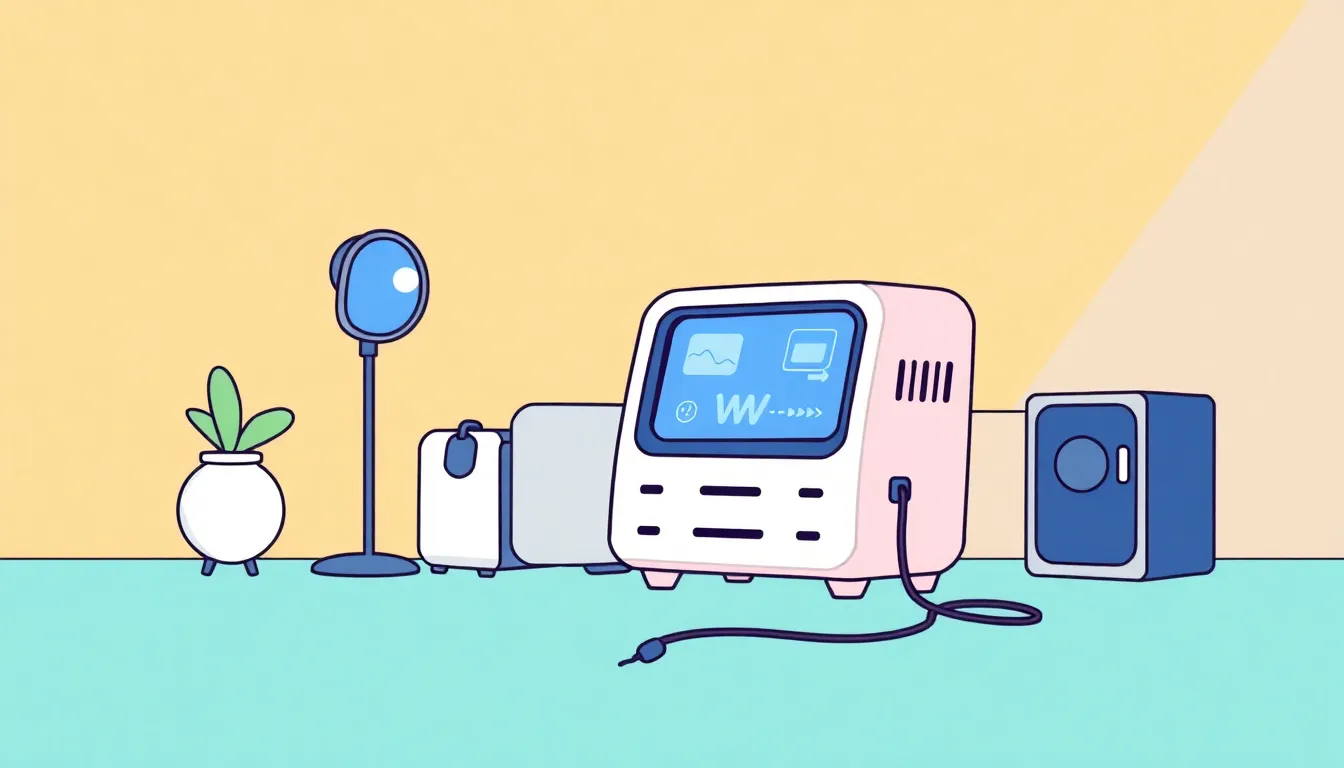
Portable power stations (battery packs) and UPS units are the best indoor options—no combustion, low noise, and easier to comply with apartment rules. Match capacity to essential loads and use safe connections and CO monitoring for anything that could generate fumes outdoors.
Choose the right portable power source
Options and when to use them:
- Portable power station (LiFePO4 preferred) — Best overall for apartments: safe chemistry, long cycle life, stable voltage, many AC and DC ports.
- Uninterruptible Power Supply (UPS) — Ideal for short outages and sensitive electronics (computers, medical devices). Choose online or line-interactive based on budget and required protection.
- Battery bank with inverter — For higher continuous loads; requires more planning and possibly a transfer switch; acceptable if installed per code and approved by landlord.
- Gasoline/propane generator — Use only outdoors far from windows and vents; generally discouraged for apartment living due to CO and permitting limitations.
Key features to prioritize: continuous watt rating, peak/surge watt rating, usable watt-hours (not just battery capacity), inverter efficiency, battery chemistry, onboard MPPT/solar charging if desired, and certifications (UL, CE).
Calculate capacity and run-time needs
Work from a simple load worksheet. List devices, typical power draw (watts), and estimated hours of daily use. Add 20–30% for headroom.
| Device | Watts | Hours/day | Wh/day |
|---|---|---|---|
| Phone chargers (2) | 10 | 4 | 40 |
| Wi‑Fi router | 12 | 24 | 288 |
| Medical device (continuous) | 60 | 24 | 1440 |
| LED lights (4) | 40 | 6 | 240 |
| Mini fridge (avg) | 70 | 6 | 420 |
| Total | 3428 Wh/day |
To size a battery: Required Wh = daily Wh / usable battery depth-of-discharge. For LiFePO4 (80–90% usable), divide by 0.8. For lead-acid (50% usable), divide by 0.5. Example: 3428 Wh/day ÷ 0.8 ≈ 4285 Wh battery.
Account for inverter losses (~5–10%) and surge needs. Motors and compressors can draw 2–6× running watts at startup—ensure your inverter’s peak rating covers that.
Set up safe placement, ventilation, and CO monitoring
Placement rules:
- Keep batteries and inverters on a non-combustible surface, away from curtains and egress paths.
- Allow 2–4 inches clearance around vents and fans for airflow; follow manufacturer clearance specs.
- Install units in areas with ambient temperatures within the recommended range (typically 0–40°C for many units).
Ventilation and CO:
- Battery stations themselves emit no CO; only combustion generators do. Never run gasoline/propane generators inside or near open windows/vents.
- If you must use a generator outdoors, place it at least 20–30 feet from the building and exhaust away from doors/windows; always use a CO alarm indoors and outdoors if available.
Accessibility and fire precautions:
- Do not block hallways, exit routes, or building equipment.
- Keep a Class ABC fire extinguisher nearby and follow fire-safety signage from the building management.
Wire, connect, and protect loads correctly
Safe connections reduce shock and fire risk:
- Use the power station’s built-in AC outlets when possible rather than chaining extension cords.
- For permanent or semi-permanent setups, use a transfer switch or interlock kit installed by a licensed electrician to avoid backfeeding the grid.
- Choose heavy-duty, appropriately rated extension cords (gauge and length matter). For runs over 20 feet or loads >1200W, use 12 AWG or larger.
- Protect sensitive electronics with surge protectors and use UPS for devices needing clean power.
Grounding and GFCI:
- Confirm the power station provides proper grounding for AC outlets or use GFCI-protected outlets for wet areas.
- Follow manufacturer wiring diagrams; don’t improvise with unapproved connectors or splitting cords.
Charge, maintain, and store batteries safely
Charging best practices:
- Use manufacturer-supplied chargers or recommended equivalents; avoid fast-charging beyond spec unless supported.
- Prefer scheduled top-ups during daylight if using solar or when grid power resumes; avoid deep regular discharges to extend cycle life.
Storage and temperature:
- Store batteries at ~40–60% state of charge for long-term storage (check manual).
- Keep batteries in cool, dry places; avoid freezing or prolonged heat exposure which shortens life and raises risk.
Inspection and lifecycle:
- Inspect terminals and cabling monthly for corrosion or looseness.
- Track cycle counts and expected lifespan (LiFePO4 commonly 2000+ cycles at 80% DoD).
Common pitfalls and how to avoid them
- Underestimating startup (surge) watts — Remedy: size inverter for peak loads and stagger heavy loads.
- Using gas/propane generators near windows — Remedy: always operate gensets outdoors and follow 20–30 ft clearance rule; prefer batteries.
- Improper cords or overloaded extension cables — Remedy: use correct AWG cable, avoid daisy-chaining, label circuits.
- Ignoring building rules or permitting — Remedy: get written approval from landlord/HOA and consult local code before installation.
- Not testing the system — Remedy: rehearse a full outage drill quarterly; check that devices actually run and that transfer methods work.
Buy, document, and rehearse your emergency power plan
Buying checklist:
- Pick a unit that meets Wh and surge needs, has LiFePO4 if possible, and carries UL or equivalent safety certifications.
- Purchase proper cabling, surge protectors, a CO alarm, GFCI outlets as needed, and a fire extinguisher.
Documentation:
- Create a one-page emergency power plan: what to plug in, step-by-step startup/shutdown, safety rules, contact numbers, and location of equipment.
- Keep hard and digital copies accessible and share with household members and, if required, building management.
Rehearse:
- Run an annual drill simulating a 4–8 hour outage. Verify battery state, recharge time, and that critical loads operate as expected.
- Log lessons learned and adjust load priorities or additional equipment purchases.
Implementation checklist
- Confirm landlord/HOA rules and local code compliance in writing.
- Calculate watt-hours and surge needs; choose appropriately rated LiFePO4 power station or UPS.
- Buy correct cords, surge protectors, CO alarm, and a fire extinguisher.
- Install placement, ventilation, and grounding per manufacturer and code.
- Document the emergency power plan and rehearse annually.
FAQ
- Can I store extra batteries in my apartment?
- Only with landlord/HOA approval and within local code limits; follow manufacturer storage SOG and keep batteries on non-combustible surfaces.
- Is LiFePO4 really safer than lithium‑ion?
- LiFePO4 has greater thermal stability, lower fire risk, and longer cycle life—it’s preferred for indoor use when available.
- How do I power a fridge without overloading the system?
- Estimate fridge startup watts (2–6× running). Use a power station/inverter with adequate surge capacity or stagger compressor cycles and prioritize fridge only when necessary.
- Do I need a transfer switch to power home outlets?
- If feeding fixed circuits from a generator or inverter, yes—use a licensed electrician and a transfer switch or interlock to prevent backfeed to the grid.
- How often should I test my emergency power setup?
- Monthly quick checks for charge/state, and a full outage drill at least once per year.