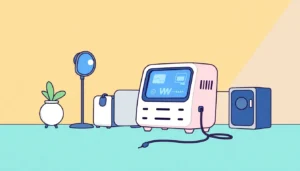
Neighborhood Battery Systems: A Practical Guide for Communities
Neighborhood batteries (also called community or street batteries) store electricity near homes and businesses to improve resilience, shave peak demand, and integrate local renewables. This guide explains how they operate, who manages them, how to plan and finance deployments, and common pitfalls to avoid.
- Quick overview of how neighborhood batteries provide backup, peak shaving, and renewable firming.
- Stakeholder roles, sizing steps, and interconnection basics you can use in planning.
- Practical controls, billing models, financing options, and a checklist for implementation.
Quick answer — one-paragraph summary
Neighborhood batteries are shared energy-storage units placed close to loads; they store excess generation (usually solar or grid off-peak), discharge during peaks or outages, and are managed by utilities, community energy providers, or cooperatives. Properly sized and controlled, they reduce peak charges, defer distribution upgrades, increase local resilience, and lower greenhouse gas intensity. Deployment requires site selection, interconnection, a software platform for controls and billing, and funding through utility programs, grants, or community financing.
Explain how neighborhood batteries work
At a basic level, a neighborhood battery charges when electricity is inexpensive or abundant (e.g., midday solar or low wholesale prices) and discharges to meet local demand, reduce grid imports, or supply critical loads during outages.
- Charging sources: distributed solar PV, the grid during off-peak, or nearby generators.
- Discharging uses: peak shaving (reduce demand charges), backup power, load shifting, and voltage/frequency support.
- Physical components: battery racks (usually Li-ion today), power conversion systems (PCS/inverters), thermal management, safety systems, and a site-level energy management system (EMS).
Example: a 200 kW / 400 kWh neighborhood battery charges with midday solar and discharges during a 6–9 PM peak window to reduce collective household demand and avoid a costly transformer upgrade.
Identify stakeholders and responsibilities
Successful projects assign clear roles early. Typical stakeholders include:
- Utility or distribution system operator — approves interconnection, may own or regulate the asset, and monitors grid impacts.
- Project developer / integrator — handles design, procurement, installation, and possibly operation.
- Community energy organizer or co-op — represents residents, manages subscriptions, and communicates benefits/constraints.
- Operations & maintenance (O&M) provider — handles routine checks, warranty claims, and firmware updates.
- Software provider — supplies EMS, controls, and billing integration.
- Host site owner — provides land or right-of-way and manages local permitting concerns.
Responsibilities mapping (concise): utilities focus on safety and interconnection; developers handle hardware and construction; communities manage customer relations and usage rules; software/O&M handle daily operation.
Size and design a street battery system
Sizing balances objectives (resilience, peak reduction, asset deferral) against cost and site constraints. Follow a stepwise approach.
- Define goals: backup duration (hours), peak power reduction (kW), and renewable firming needs (kWh per day).
- Collect load data: 15–60 minute interval demand profiles for the target neighborhood over at least one year.
- Model scenarios: peak shaving only, outage backup, or mixed use. Use simple spreadsheet models or software tools to simulate dispatch and state-of-charge (SoC).
- Derive capacity: required kW = maximum dispatch rate needed; required kWh = average discharge energy per event × number of events between charges.
- Factor in efficiency and degradation: assume round-trip efficiency 85–92% and battery degradation ~2–3%/year depending on chemistry and duty cycle.
| Objective | Power (kW) | Energy (kWh) |
|---|---|---|
| Peak shaving for 100 homes | 250 | 500 |
| Backup 4 hours for 50 homes | 150 | 600 |
| Solar firming (midday smoothing) | 100 | 300 |
Design considerations: containerized vs. modular, indoor vs. outdoor, thermal management, fire suppression, noise, permitted setbacks, and future expandability.
Install and interconnect with the grid and homes
Interconnection and safety are non-negotiable. Coordinate with the local distribution utility early in the project timeline.
- Site selection: proximity to load center, grid connection point (secondary/tertiary), accessibility, and minimal environmental impact.
- Permitting: building permits, electrical inspections, fire department approvals, environmental reviews (e.g., noise, containment).
- Interconnection process: apply to utility, complete studies (safety, protection, hosting capacity), install protection relays and anti-islanding controls per utility requirements.
- Physical wiring: transformer sizing, switchgear, metering points, and separate critical circuits if backup is needed.
- Commissioning: factory acceptance tests, on-site commissioning, grid sync tests, and operational validation under normal and islanded modes.
Example checklist for interconnection submissions: single-line diagram, protection settings, battery datasheet, EMS description, and a contingency operations plan.
Set sharing rules, controls, and software
Software defines value: EMS and business logic determine who gets power when, safety overrides, and payment reconciliation.
- Control objectives: prioritize critical-load backup, then tariff-driven peak shaving, then renewable firming or market participation.
- Access policies: subscription tiers (priority backup, basic peak shaving, green-credit offsets), pay-per-use, or HOA-managed allocations.
- Dispatch logic: rule-based schedules, predictive optimization (short-term load & price forecasts), or market bidding if allowed.
- Safety interlocks: automatic disconnect on grid faults, over/under voltage protections, and manual emergency stop accessible to first responders.
- Integrations: utility SCADA, DERMS, home energy management systems (HEMS), and customer portals for status and billing info.
Compact example rule: “During an outage, Tier 1 subscribers receive up to 3 kW for critical circuits for 4 hours; remaining capacity is pooled for non-critical loads only after Tier 1 needs are met.”
Track performance, billing, and savings
Transparent metering and reporting build trust and demonstrate value. Set up clear KPIs and billing flows early.
- Key KPIs: energy throughput (kWh charged/discharged), peak reduction (kW), availability (%), cycle counts, and system efficiency.
- Metering architecture: meter at the battery, at the primary feeder, and (optionally) aggregated household meters to allocate benefits.
- Billing models: subscription fee, usage-based billing (per kWh or per kW reduction), savings-sharing (split utility bill reductions), or credits on bills.
- Reporting cadence: real-time dashboards for operations, monthly statements for subscribers, and annual performance summaries for regulators/grantors.
| Model | Customer charge | Benefit |
|---|---|---|
| Subscription | $10–$30/month | Guaranteed backup priority |
| Usage-based | $0.05–$0.20/kWh used | Pay only for energy consumed |
| Savings-share | 0–$5/month | Portion of avoided demand charges |
Finance options, incentives, and ROI
Financing models vary by market; choose a structure aligning risk appetite, control needs, and available incentives.
- Ownership models: utility-owned, community-owned cooperative, third-party developer with long-term contract, or hybrid.
- Funding sources: municipal bonds, green banks, energy service agreements (ESAs), community crowdfunding, grants, and PACE programs.
- Incentives: federal/state tax credits, grant programs for resilience, and demand charge reduction incentives where available.
- ROI factors: capital cost ($/kWh and $/kW), O&M, replacement/residual value, avoided demand charges, time-of-use arbitrage, and monetized resilience value.
Quick ROI rule of thumb: valley-to-peak price spreads and avoided distribution upgrade costs usually drive payback faster than energy arbitrage alone. Run a 10-year cashflow model including degradation and replacement costs.
Common pitfalls and how to avoid them
- Underestimating hosting capacity — Remedy: engage utility early and perform detailed feeder studies.
- Poorly defined customer rules that lead to disputes — Remedy: publish clear subscription tiers, SLAs, and dispute resolution procedures.
- Ignoring safety and fire code details — Remedy: follow NFPA 855 (or local equivalent) and involve the fire authority during design review.
- Overreliance on a single vendor/software — Remedy: require open APIs, standardized telemetry, and exit/transfer plans in contracts.
- Insufficient metering for equitable billing — Remedy: install utility-grade meters at key points and a transparent allocation algorithm.
- Underfunding O&M and software updates — Remedy: budget recurring O&M and establish service-level agreements with providers.
Implementation checklist
- Define objectives (resilience, peak shaving, renewables).
- Gather 15–60 min load and generation data for 12 months.
- Engage utility and initiate interconnection study.
- Choose ownership and financing model; secure funding or grants.
- Size system (kW & kWh), design site, and select vendor with open APIs.
- Complete permitting, fire review, and safety approvals.
- Install, commission, and run acceptance tests (normal & islanded).
- Publish sharing rules, billing method, and subscriber agreements.
- Set up monitoring dashboards, KPIs, and O&M contracts.
FAQ
- Q: Can neighborhood batteries replace individual home batteries?
- A: They can complement or partially replace home batteries by pooling capacity and lowering per-household costs, but they may not always meet individual household needs for full off-grid autonomy.
- Q: How long do batteries last?
- A: Lithium-ion systems typically have useful lifetimes of 10–15 years depending on cycles, depth of discharge, and thermal conditions. Expect 70–80% capacity after warranty periods in many deployments.
- Q: Are there safety risks for communities?
- A: Risks exist (thermal runaway, electrical faults), but they’re mitigated with certified equipment, NFPA/IEC-compliant designs, fire suppression, and strict commissioning and maintenance protocols.
- Q: Do utilities allow aggregated batteries to participate in markets?
- A: Participation depends on regional market rules and utility tariffs. Aggregation is possible in many markets with DERMS integration and coordination with the ISO/RTO or utility programs.
- Q: What is the typical payback period?
- A: Payback ranges widely—3–12 years—depending on local electricity pricing, demand-charge avoidance potential, incentives, and whether distribution upgrades are deferred.